“The stewardship of a habitat bank is undertaken by professionals to ensure an ongoing biodiversity net gain and maintain a fragile ecosystem for developers over the term of the BNG contract”
How do we grow a ‘Habitat Bank’
Spring Farm BNG have a long history of land management throughout Cheshire. Tracts of land that have been used in the past for farming may not be economical to farm using today’s methods and modern machinery. Some fields, wooded areas and hedgerow have become surrounded by roadways, railways and modern infrastructure. These are ideal to turn into Bio-diverse ‘habitat banks’ for BNG offset.
Commercially farmed open fields bounded by limited hedgerow and overgrown wooded areas can be turned into a haven for wild flowers, attracting insects and native creatures, ideal for Biodiversity Net Gain project.
Case Study: Moat Field
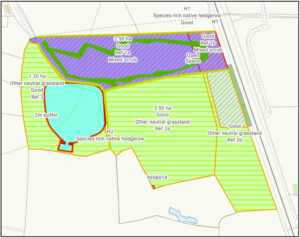
Located on the outskirts of Crewe Cheshire, Moat Field consists of modified grassland (in poor condition). The site contains a protected ancient monument, fish-pond and unmanaged woodland area with many native species of trees including large Oak.
Spring Farm BNG has created a complex area of Bio-diverse wild flower meadow, native hedgerow and woodland that can support a wide variety of native plants, insects and creatures, making it an ideal BNG managed habitat.
Delivering a simple solution to your offsite BNG obligations
- We are working with Cheshire East and their Environmental Team; we are enhancing grassland that surrounds an ancient Moat circa 1250/1350 AD
- We have teamed up with ELM Consultants, and Cheshire Wildlife Trust in producing the plan
- We will be providing advice and supplying BNG units to Planners, Planning Consultants, House Builders and Property Developers.
- The land has Barn Owls, Brown Hares, Voles, Lapwings and a wide range of insects and birds native to the grasslands of Cheshire.
Management objectives
The project aims to deliver a mosaic of habitat types to increase the value of the site for wildlife especially invertebrates, birds and mammals. By increasing the complexity and range of habitat types especially of grassland, tall herb and scrub it is anticipated the site will act as a stepping stone between the existing sites of Sandbach Flashes Wettenhall and Darnhall Woods.
Planting includes:
- Planting includes 6 hectares of bespoke wild flower seed
- Scrub species including 60-80cm bare root whips
- Created 850 Meters of new native hedgerow
- Planting of native sapling trees and shrubs